
Bench Warrants in St. Clair County
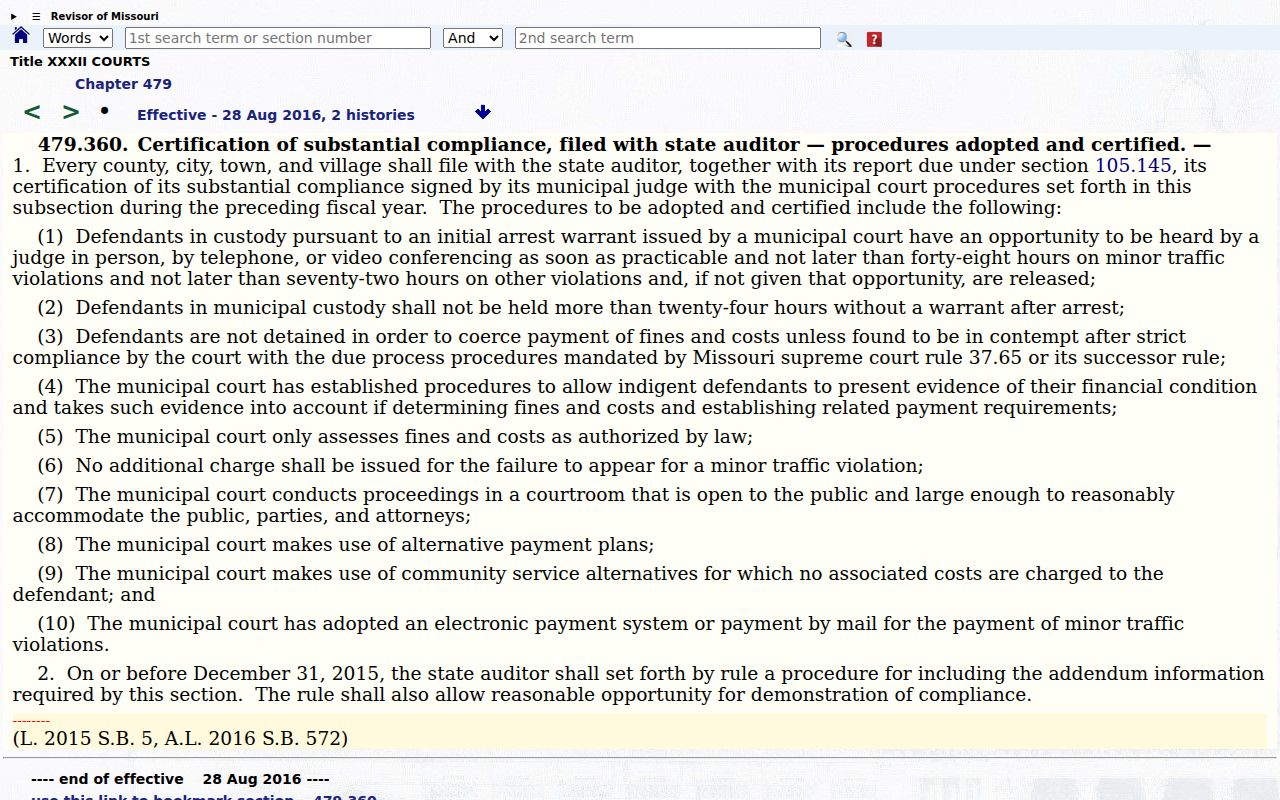
The official municipal procedure statute supplies the hearing safeguards shown here.
A city case that ends in a bench warrant raises the same question every time: which office actually knows? In St. Clair County the answer depends on the record. The Circuit Clerk holds the court files, dockets, and case entries. The Sheriff, by contrast, keeps the law enforcement side of things, including service of process and custody records after an arrest. Neither office publishes a complete public live warrant portal, so an active warrant can hide from any single search. Start by identifying the issuing division. If you have a cause number, give it to the clerk who answers, because it pulls the right file in seconds. Then ask that office directly whether a bench warrant is still open, recalled, or quashed. Case.net can add public docket context for St. Clair County cases. Just remember what it is not. It is not a warrant database, and a blank result there proves nothing about whether process is active or recalled. Only the issuing court can confirm that.
How a St. Clair County Bench Warrant Is Issued
Bench warrants in St. Clair County begin when someone skips a court setting. The judge signs the warrant, and it goes into the file the Circuit Clerk maintains. From there the Sheriff picks up the enforcement role, handling service and any resulting custody. Each office sees a different slice of the process. The clerk's records show the docket entries and any later recall. The Sheriff's side shows what happened on the street. Since St. Clair County has no complete public live warrant portal, neither slice reaches the public on its own. So call the issuing division. Give a cause number if you have one. Ask the clerk to confirm the present status of the warrant rather than trusting a docket entry or an old payment. Case.net may supply public docket context. It cannot establish that process is active or recalled, though. That confirmation comes from the issuing court alone.
Bench Warrant vs Arrest Warrant
The difference is the trigger. An arrest warrant in St. Clair County follows a criminal charge, while a bench warrant follows a missed court date or a violation of the court's orders. Both direct the Sheriff to bring someone in. In practice, the lookup is identical either way: identify the issuing division, hand over a cause number, and ask the Circuit Clerk to confirm the current status. No complete public live warrant portal covers the county. Case.net offers docket context only, and it cannot show whether process is active or recalled.
| Feature | Bench Warrant | Arrest Warrant |
|---|---|---|
| Trigger | Confirm with the official record custodian. | Confirm with the official record custodian. |
| Who Issues It | Confirm with the official record custodian. | Confirm with the official record custodian. |
| Underlying Case | Confirm with the official record custodian. | Confirm with the official record custodian. |
| How It Clears | Confirm with the official record custodian. | Confirm with the official record custodian. |
How to Resolve a Bench Warrant
Resolving one means going back to the source. In St. Clair County, contact the division that issued the bench warrant, usually the Circuit Clerk's office or a municipal court clerk, and ask what it needs from you. Have a cause number ready. The clerk can confirm the status, explain the bond, and set the next court date. Paying an old fine may not be enough, since only the issuing court can recall or quash the warrant. No public portal tracks this, and Case.net cannot establish that process is active or recalled.
- Use the named official court or law enforcement contact and confirm the record with the office that maintains it.
- Use the named official court or law enforcement contact and confirm the record with the office that maintains it.
- Use the named official court or law enforcement contact and confirm the record with the office that maintains it.
- Use the named official court or law enforcement contact and confirm the record with the office that maintains it.
Caution: Confirm the current court status and instructions before travel because a record can change after payment, appearance, service, or recall.
Which St. Clair County Court Issued It
Which court holds the file shapes everything else. A St. Clair County bench warrant can come from the Circuit Court or from one of the municipal divisions, and each keeps its own records. The Circuit Clerk maintains the court side. The Sheriff handles law enforcement records, service, and custody. That split matters because St. Clair County publishes no complete public live warrant portal tying it all together. Figure out the issuing division first. Call with a cause number if you have it, and ask that office to confirm the present status of the warrant. Do not rely on a docket entry or a payment record alone, since a later recall may not appear in every system at once. Case.net may provide public docket context. Keep its limits in mind. It is not a warrant database, and it cannot establish that process is active or recalled. The issuing court's word is the one that counts.
St. Clair County Bench Warrants in Municipal Court
Rule 37 provides city-court custody and recall safeguards.
Bench Warrant Recall Notices
The court should communicate a prompt cancellation to law enforcement.
St. Clair County Bench Warrant Forms
No local motion-to-recall form or filing fee was found.
Bench Warrants and Missed Payments
Ask about appearance and ability-to-pay procedures before assuming payment clears status.
Confirming a St. Clair County Bench Warrant
The issuing court, not the Sheriff, controls recall.